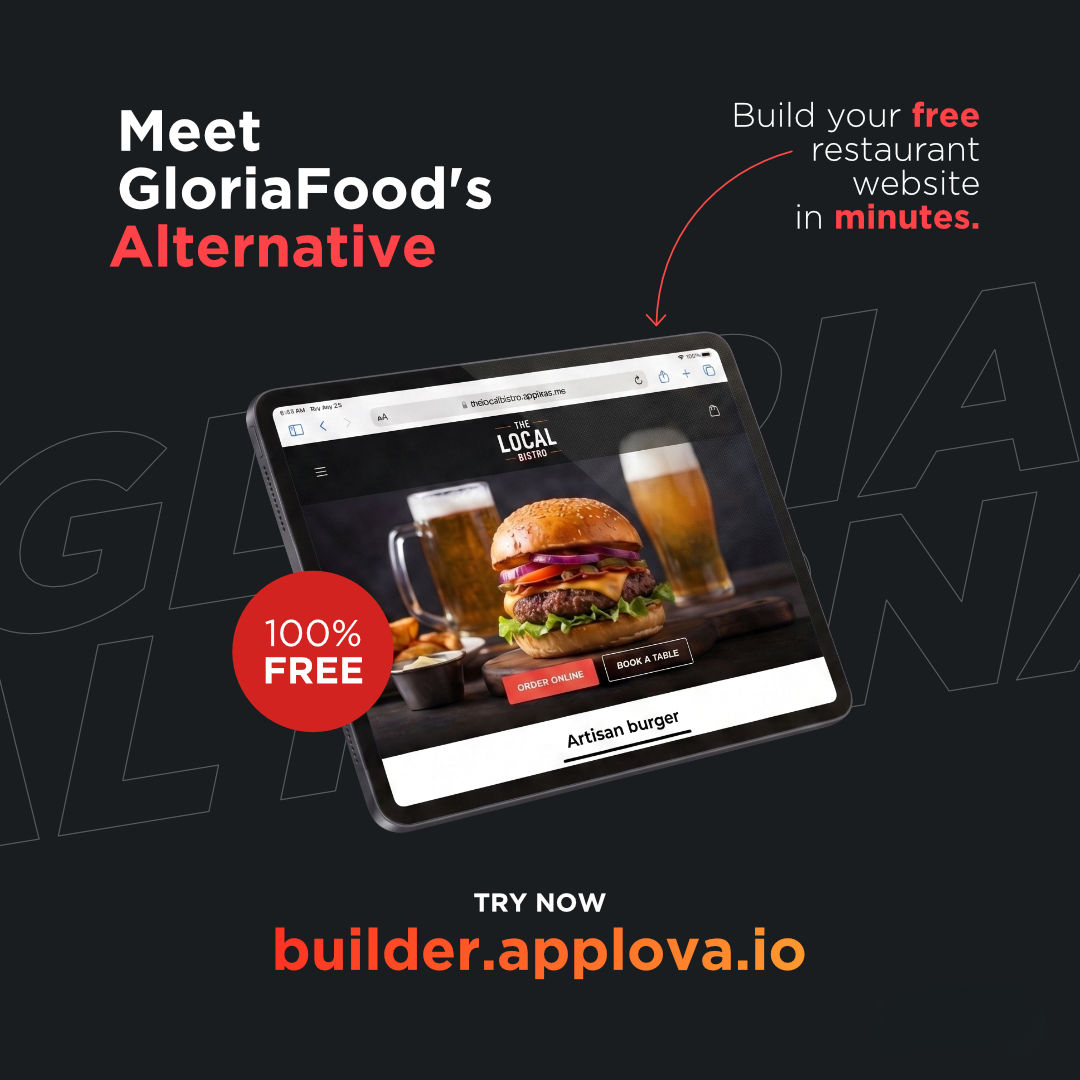
To migrate from GloriaFood without losing orders, treat the switch as an operational project, not a software swap, and follow a structured six-step plan: audit your current setup, choose the right replacement, rebuild and test the menu, run parallel testing, update every ordering link, and train your staff before going live.
The good news is that modern DIY ordering builders like builder.applova.io have made migration significantly faster than it used to be. Restaurants can now rebuild their ordering experience without developers, agencies, or long onboarding cycles, often going live in hours instead of weeks.
Key Takeaways
- A clean migration follows six steps: audit, choose, rebuild, parallel test, update links, and train staff.
- Most lost orders come from missing modifiers, broken payment flows, and
outdated ordering links, not the new software itself. - DIY ordering website builders let restaurants migrate without developers, often going live in hours.
- Start migration early, the best transitions happen with time to spare, not at the
deadline.
The Biggest Fear During Migration
When restaurants switch online ordering platforms, the biggest fear is simple: “What if we lose orders?”
And honestly, that fear is valid. A messy migration can create:
- Downtime
- Missing menu items
- Broken payment flows
- Customer confusion
- Staff stress
- Lost revenue
But migrations do not have to be chaotic.
Today, many restaurants are moving toward DIY online ordering builders that simplify migration and reduce setup complexity. Platforms like builder.applova.io allow restaurants to launch a new branded ordering website without needing developers or lengthy onboarding projects. That means restaurants can migrate faster while keeping operations stable.
Why Migration Planning Matters
Restaurant technology migrations affect more than just software. They affect operations.
A poorly managed migration can impact:
- Revenue flow
- Customer trust
- Kitchen operations
- Staff efficiency
- Order accuracy
That’s why migration should be treated like an operational project, not just a technical task. The restaurants with the smoothest transitions usually prepare earlier and test more carefully.
Step 1: Audit Your Current Setup
Before moving anything, document your current ordering operation. This includes:
- Full menu
- Modifier groups
- Pricing
- Business hours
- Delivery zones
- Tax settings
- Payment methods
- Promo codes
- Customer workflows
A lot of restaurants skip this step and regret it later.
Pro Tip: Screenshot every page of your current ordering flow, including the cart, checkout, confirmation screen, and the email/SMS confirmation. These screenshots become your “source of truth” when rebuilding in the new system.
Step 2: Choose Your New Platform Carefully
Do not choose based only on price or feature lists. The real question is: how quickly can your restaurant transition without disrupting operations?
Many restaurant operators now prefer platforms with:
- DIY onboarding
- Drag-and-drop setup
- Clover or Square integrations
- Fast menu configuration
- Easy ordering management
- Real human support when needed
Step 3: Rebuild And Test The Menu
This is where most migration problems happen.
Always test:
- Modifier logic
- Combo behavior
- Pricing accuracy
- Tax calculations
- Order notifications
- Kitchen workflow
Never assume everything imported perfectly.
Modern DIY ordering builders make this process significantly easier by allowing restaurants to manage menus visually instead of relying on technical setup teams. With platforms like builder.applova.io, restaurants can quickly adjust categories, modifiers, pricing, and ordering flows themselves.
Step 4: Run Parallel Testing
Before shutting off GloriaFood completely, run your new system alongside it. This helps catch:
- Missing items
- Notification problems
- Printer issues
- Workflow bottlenecks
Even a few days of testing can prevent major operational problems.
Step 5: Update Your Ordering Links Everywhere
Restaurants often forget how many places their ordering links exist. Update:
- Website buttons
- Google Business Profile
- Instagram bio
- Facebook page
- QR codes
- Email campaigns
- SMS campaigns
- Printed materials
Pro Tip: Assign one person to update every link in a single coordinated hour, then verify each one from a mobile phone on cellular data (not store Wi-Fi). The Google Business Profile order link is the one most operators forget.
Step 6: Train Staff Before Going Live
Do not surprise your team. Staff should understand:
- Order flow
- Notification flow
- Refund handling
- Customer support process
- POS behavior
Even a 30-minute walkthrough helps.
Can Restaurants Migrate From GloriaFood Quickly?
Yes. Many restaurants can migrate surprisingly fast if they prepare properly and choose a platform designed for restaurant operations. With builder.applova.io, restaurants can:
- Rebuild menus quickly
- Launch a branded ordering website
- Connect Clover or Square POS
- Customize ordering workflows
- Start accepting commission-free orders
Some operators can go live in hours instead of weeks.
Launch your new ordering site
Why Restaurants Are Migrating To Applova
Applova now offers a DIY online ordering builder specifically designed for restaurant operators looking to move away from GloriaFood smoothly.
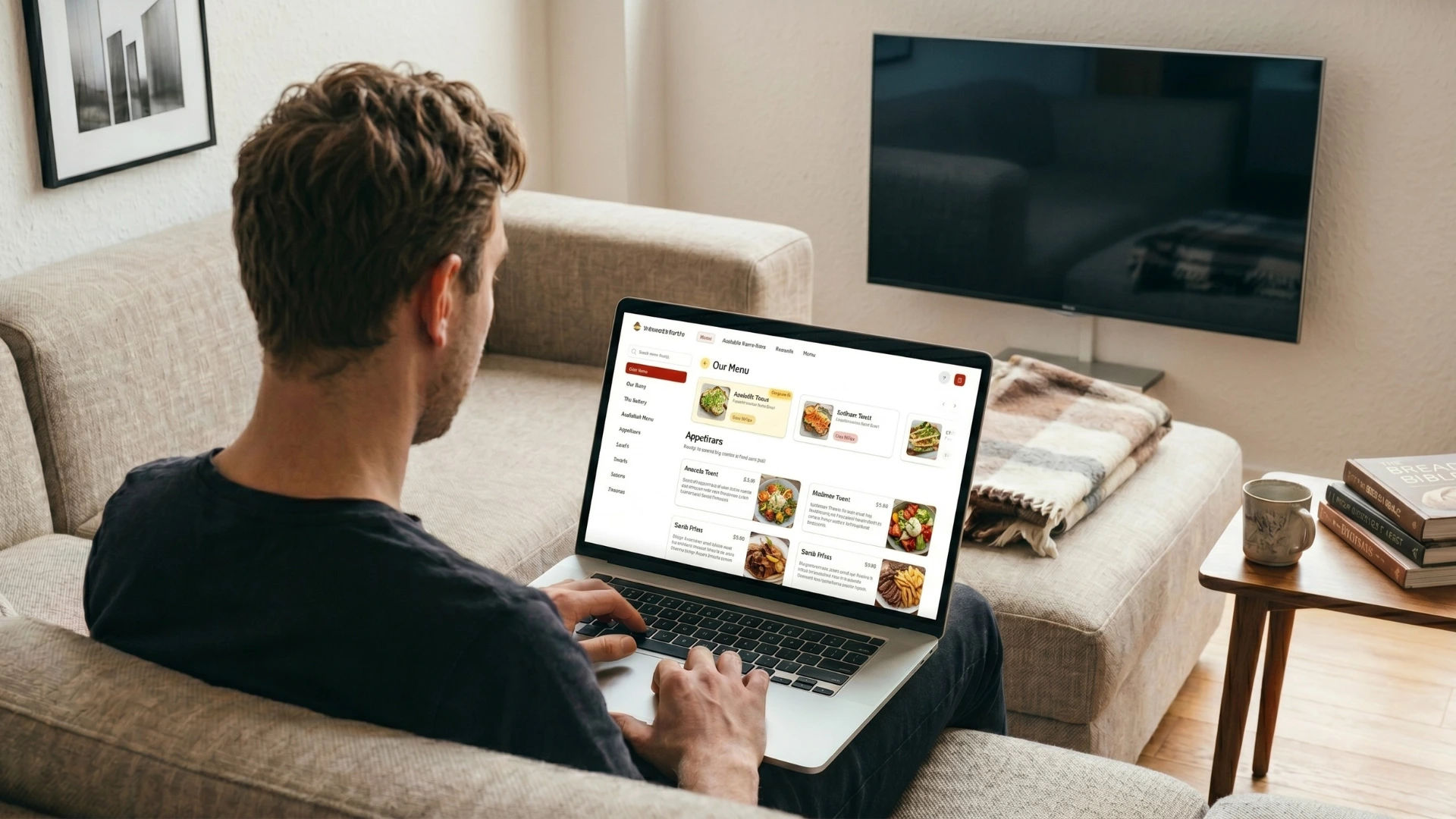
With builder.applova.io, restaurants can:
- Create a branded ordering website
- Accept commission-free online orders
- Connect Clover and Square POS
- Customize menus and modifiers
- Manage promotions and loyalty tools
- Launch quickly without developers
Unlike complicated enterprise platforms, Applova focuses on fast restaurant onboarding and operational simplicity. Restaurants can manage their own ordering setup while still having access to real support teams when needed.
Ready To Move From GloriaFood?
builder.applova.io helps restaurants launch commission-free online ordering
without complicated setup or marketplace dependency.
Whether you use Clover, Square, or standalone operations, Applova makes migration simpler
with:
- DIY setup tools
- Fast onboarding
- Flexible restaurant workflows
- Real support teams
Start building your new ordering experience before the GloriaFood shutdown deadline gets closer.
Launch your branded ordering site
at builder.applova.io.
Quick Summary
Migrating from GloriaFood without losing orders comes down to preparation and testing. Audit your current setup, choose a platform that matches your operations, rebuild and test the menu carefully, run a parallel test before going live, update every ordering link in one coordinated push, and train your staff. Modern DIY builders like builder.applova.io have made this faster than ever, restaurants can now rebuild their ordering experience visually, connect Clover or Square POS, and go live in hours instead of weeks, all without developers.
Frequently Asked Questions
How long does it take to migrate from GloriaFood?
Migration time depends on your menu size and the platform you choose. With DIY ordering builders like builder.applova.io, many restaurants can rebuild their ordering experience in hours. Including auditing, menu testing, parallel runs, link updates, and staff training, plan for around one to two weeks of preparation for a clean
migration without lost orders.
Can I migrate from GloriaFood without a developer?
Yes. DIY ordering builders like builder.applova.io are designed specifically for restaurant operators to manage migration themselves. You can rebuild menus visually, customize ordering flows, and connect your POS without writing code or hiring agencies.
What’s the safest way to switch from GloriaFood to a new
platform?
Run both systems in parallel for a few days before fully shutting down GloriaFood. This lets you compare tickets, catch missing items, and fix workflow problems before guests experience them. Once parallel testing is clean, flip your ordering links in one coordinated push.
Will my customers notice the migration from GloriaFood?
If you plan the cutover properly, the impact on customers should be minimal. Update your ordering links across your website, Google Business Profile, social media, and QR codes during the switch so guests don’t run into broken pages or checkout confusion.
When should restaurants start the GloriaFood migration?
As early as possible. GloriaFood shuts down on April 30, 2027, but starting now gives you time to compare platforms, rebuild your menu carefully, run parallel tests, and train your team without the stress of a last-minute scramble.